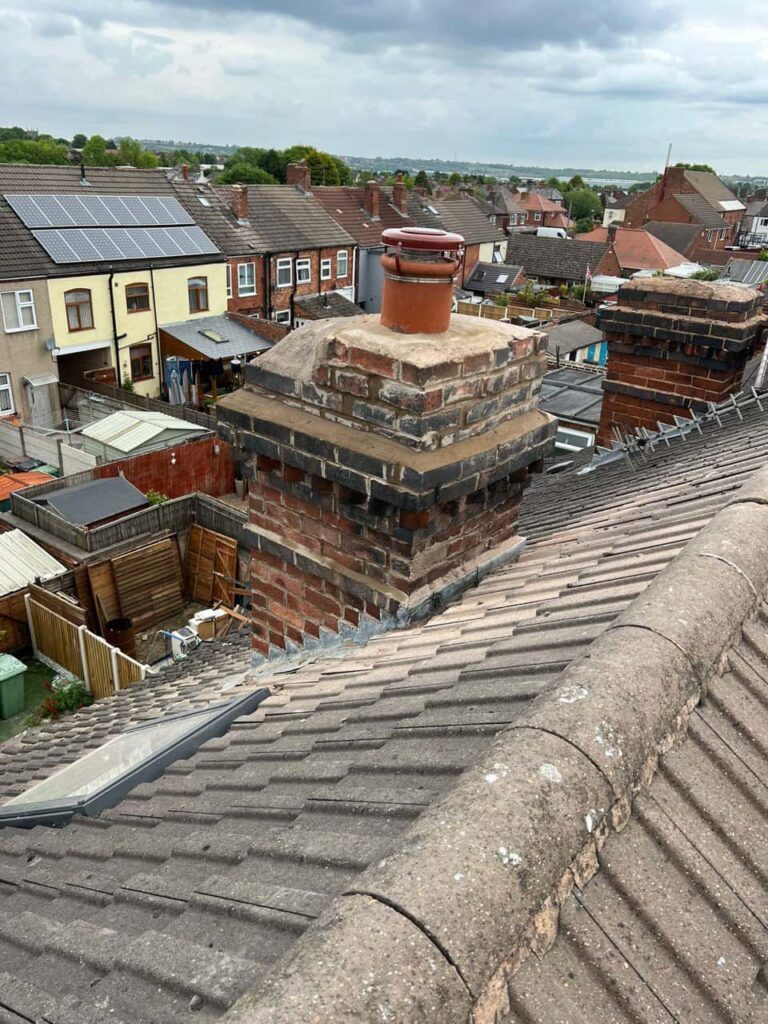
Chimneys are exposed to the same changing weather conditions as the rest of a roof, but their position and construction can make them particularly vulnerable to deterioration. Cracked masonry, damaged flashing and problems with the chimney pointing can eventually allow water to enter the roof structure.
For homeowners in Oadby, Leicestershire, recognising common chimney problems can help identify defects early and reduce the risk of moisture affecting surrounding roofing materials.
Why Chimney Maintenance Matters
A chimney forms an important junction where masonry meets the roof covering. This connection needs to remain weather-resistant to prevent rainwater from entering the building.
When chimney components deteriorate, water can find its way through gaps and damaged areas. Moisture may then affect the roof timbers, underlay or ceilings below.
Regular visual checks from a safe position can help identify obvious problems, while professional inspections can investigate defects that are difficult to see from ground level.
Cracked or Damaged Chimney Masonry
Brickwork and mortar can deteriorate gradually due to prolonged exposure to rain, wind and changes in temperature. Cracks in the masonry may become more noticeable over time, particularly around joints and exposed sections.
Small cracks should not automatically be assumed to be harmless. Their cause and extent need to be considered, as continued deterioration can allow water to penetrate the chimney structure.
Where damaged masonry is affecting the roof junction or allowing moisture into the property, appropriate repair work may be necessary.
Deteriorating Chimney Pointing
Pointing refers to the mortar joints between bricks. Over time, these joints can become weathered, cracked or loose.
Damaged pointing can create pathways for water to enter the masonry. In freezing conditions, trapped moisture can also contribute to further deterioration.
Repairing defective pointing can help restore the integrity of the chimney and reduce exposure to continued moisture penetration.
Damaged Chimney Flashing
Flashing is installed where the chimney meets the roof and is designed to prevent water from entering the junction. Because this area is exposed to rainfall and movement, flashing can eventually become loose, cracked or deteriorated.
Signs of flashing problems may include visible gaps, lifted sections or damp patches around the chimney area inside the property.
If the flashing is no longer providing an effective seal, professional repair or replacement may be required.
Problems With the Chimney Capping
The top of a chimney is exposed to rain and other weather conditions. Damaged or deteriorated chimney caps and associated components can allow water to enter the chimney structure.
Water entering from above can contribute to dampness and deterioration within the masonry. A professional inspection can establish whether the chimney capping remains in suitable condition and whether repairs are needed.
How Chimney Problems Can Affect the Roof
A chimney defect does not always remain isolated to the chimney itself. Water entering through damaged pointing, masonry or flashing can reach adjacent roofing materials and the roof structure.
Possible warning signs include:
- Damp patches around ceilings near the chimney
- Water staining in the loft
- Damp or deteriorating roof timbers
- Cracked or loose chimney masonry
- Damaged flashing around the chimney base
- Visible gaps around the roof-to-chimney junction
The location of an internal damp mark does not necessarily indicate the exact point where water is entering. Moisture can travel through roofing materials before becoming visible inside the property.
When Should Chimney Repairs Be Considered?
Chimney repairs should be considered when visible deterioration is present or when there are signs of water ingress around the chimney and roof.
It is particularly important to arrange an assessment when cracks are becoming larger, mortar joints are deteriorating, flashing has become displaced or dampness is appearing inside the property.
Addressing defects at an early stage can help prevent continued moisture exposure and identify whether related roof repairs are also required.
Professional Chimney and Roof Repairs in Oadby
Chimney repairs require careful assessment because several different components work together to keep the roof junction weather-resistant.
At Oadby Roofing Repairs, we provide professional roofing repair services for properties in Oadby, Leicestershire. We can assess chimney-related defects and examine the surrounding roof area to identify problems that may require attention.
The appropriate repair will depend on the condition of the masonry, pointing, flashing, capping and adjacent roofing materials.
Conclusion
Chimney problems can develop gradually, but cracked masonry, deteriorating pointing, damaged flashing and defective capping can eventually affect the surrounding roof. Recognising these warning signs and arranging a professional assessment can help identify the source of moisture before the problem becomes more extensive.
If you have noticed damage around your chimney or signs of water ingress at your Oadby, Leicestershire property, Oadby Roofing Repairs can assess the affected area and advise on suitable repairs. Contact us to arrange a professional inspection.
Call us on: 0116 216 5695
Click here to find out more about Oadby Roofing Repairs
Click here to complete our contact form and see how we can help you with your roofing needs.