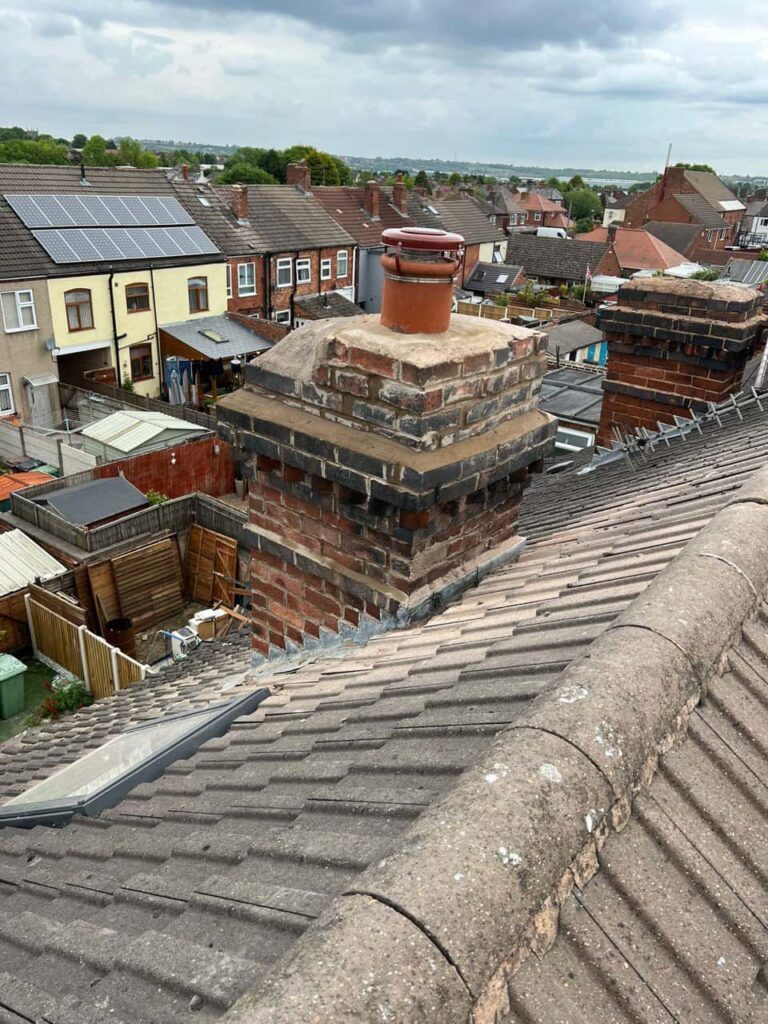
A roof is designed to create a continuous barrier against the weather, protecting a property from rain, wind, and moisture throughout the year. However, certain areas of the roof are naturally more vulnerable than others, and chimneys are among the most common locations where roofing problems develop. For homeowners in Oadby, Leicestershire, understanding why chimneys often become a weak spot can help prevent leaks, structural deterioration, and costly disruptions to the home.
At Oadby Roofing Repairs, we regularly carry out inspections and repairs around chimney structures, helping homeowners maintain a secure and weather-resistant roof.
Why Chimneys Create Vulnerable Areas
Unlike most sections of a roof, a chimney interrupts the continuous surface of the roofing system. Wherever a structure passes through the roof, additional materials and seals are required to prevent water from entering.
This creates multiple junctions where problems can occur, including:
- Lead flashing around the chimney base
- Mortar joints within the brickwork
- Roof valleys near the chimney
- Seals where roofing materials meet the chimney structure
Because these areas are exposed to constant weather conditions, they often require more attention than other parts of the roof.
Flashing Is Frequently the First Point of Failure
Lead flashing is installed around chimneys to create a waterproof seal between the roof covering and the chimney stack. Over time, flashing can deteriorate, become loose, or suffer damage from weather exposure.
Common flashing problems include:
- Lifting or movement caused by strong winds
- Cracks developing through age and weathering
- Separation from the brickwork
- Water finding pathways beneath damaged sections
Even minor flashing defects can allow significant amounts of water into the roof structure.
Chimney Mortar Naturally Deteriorates
The mortar holding chimney bricks together is constantly exposed to rain, frost, wind, and temperature changes. As the years pass, mortar joints can weaken and begin to crumble.
Deteriorating mortar may lead to:
- Water penetration into the chimney structure
- Loose bricks
- Reduced structural stability
- Moisture reaching surrounding roofing materials
Regular inspections help identify early signs of mortar wear before more serious issues develop.
Weather Exposure Is More Severe at Roof Level
Chimneys sit at one of the highest points of the property and therefore receive the full force of changing weather conditions. High winds, heavy rain, and freezing temperatures can all accelerate wear and tear.
This constant exposure can contribute to:
- Cracked mortar joints
- Damaged flashing
- Brickwork deterioration
- Increased vulnerability to leaks
The elevated position of a chimney makes preventative maintenance particularly important.
Small Leaks Can Cause Significant Damage
Many chimney-related leaks begin as relatively minor defects. However, once water enters around a chimney, it can travel through roof spaces and affect areas far from the original source.
This may result in:
- Damp patches on ceilings
- Water staining on walls
- Moisture within loft insulation
- Timber deterioration
Because water often travels before becoming visible, chimney leaks can remain undetected for some time.
Chimney Movement Can Affect Roofing Materials
As properties age, minor movement within the building structure can sometimes affect chimney stacks. Even small shifts may place additional strain on flashing, mortar joints, and surrounding roof coverings.
Signs of movement may include:
- Gaps appearing around flashing
- Cracked mortar
- Visible separation between materials
- Recurring leaks in the same area
Professional assessment helps determine whether repairs are required to restore stability and weatherproofing.
Blocked or Damaged Chimney Components Can Create Problems
The condition of the chimney itself can also affect the surrounding roof. Damaged chimney caps, loose pots, or blocked drainage pathways may allow excess moisture to accumulate around vulnerable areas.
Routine maintenance helps ensure:
- Water is directed away correctly
- Roofing materials remain protected
- Moisture does not become trapped around the chimney structure
Proper upkeep supports the long-term condition of both the chimney and the roof.
Professional Inspections Are Essential
Many chimney-related defects are difficult to identify from ground level. A professional roof inspection provides a detailed assessment of the chimney, flashing, and surrounding roofing materials.
Regular inspections can identify:
- Early flashing deterioration
- Cracked mortar joints
- Loose brickwork
- Hidden signs of water ingress
Early intervention often prevents more extensive repairs later.
Why Choose Oadby Roofing Repairs?
At Oadby Roofing Repairs, we provide:
- Chimney inspections and repairs
- Lead flashing replacement and maintenance
- Roof leak detection
- Ridge tile and roof tile repairs
- Professional roofing services throughout Oadby, Leicestershire
Our experienced team focuses on identifying roofing weaknesses early and providing dependable solutions that protect your home from the elements.
Conclusion
Chimneys are one of the most common weak points on any roof because they interrupt the roof structure and rely on multiple components to remain fully weatherproof. Flashing deterioration, mortar wear, weather exposure, and structural movement can all contribute to chimney-related roofing problems.
For homeowners in Oadby, Leicestershire, regular chimney inspections and timely repairs are essential for maintaining a watertight and reliable roof. At Oadby Roofing Repairs, we provide professional roofing services designed to identify potential issues early and keep your property protected throughout every season.
Call us on: 0116 216 5695
Click here to find out more about Oadby Roofing Repairs
Click here to complete our contact form and see how we can help you with your roofing needs.